Bed bug thermal and chemical treatment in Charleston, SC addresses the distinct challenges of high-density hospitality properties, short-term vacation rentals, and historic residential structures. In humid…
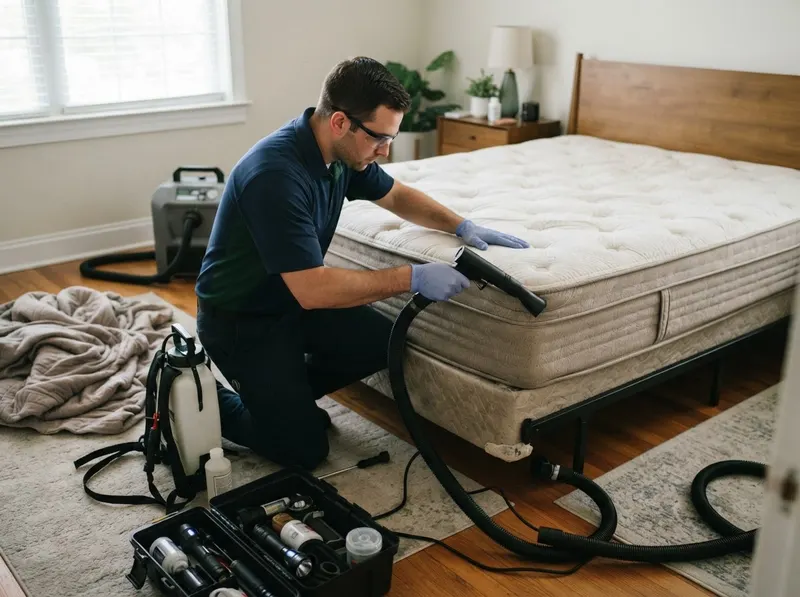
Bed bug thermal and chemical treatment in Charleston, SC addresses the distinct challenges of high-density hospitality properties, short-term vacation rentals, and historic residential structures. In humid microclimates like Harleston Village and Downtown Charleston South of Broad, ambient indoor humidity alters how insecticides bind to porous building materials, while plaster-and-lath construction creates deep harborages behind baseboards that chemical fogs cannot penetrate. Thermal remediation bypasses structural harborages by circulating dry convective air up to 122°F to 135°F using industrial heating units and axial air movers. Heat penetrates 4 inches into mattress cores, wall voids, subfloors, and upholstered furniture, coagulating insect cellular proteins and destroying bed bug eggs within a single 8-hour continuous deployment.
Chemical-only barrier treatments suit isolated, low-level introductions or multi-unit configurations where thermal containment would transfer heat into neighboring tenant spaces. Technicians inject targeted microencapsulated residual formulations and insect growth regulators directly into headboards, electrical junctions, box springs, and tack strips along perimeter flooring. In modern single-family properties across Daniel Island and West Ashley, combining localized thermal remediation with perimeter residual barriers prevents fleeing insects from entering wall cavities and establishing satellite colonies. The trade-off between protocols centers on equipment footprint versus re-entry speed: thermal protocols require removing heat-sensitive items such as candles, medications, and vinyl records but allow same-day re-entry within 2 hours of cool-down, whereas chemical protocols require negligible prep work but mandate repeat site visits across 30 days to break successive egg hatch cycles.
Historic wood framing in Wagener Terrace, French Quarter, and Hampton Park Terrace properties presents distinct structural considerations during thermal remediation. Pine subflooring and antique heart-pine moldings require slow ramp rates of 1 degree per 5 minutes to prevent wood warping while thermistors track interior cavity temperatures. On James Island, elevated crawlspaces introduce thermal sink dynamics where uninsulated floorboards draw heat downward; technicians isolate floor registers and crawlspace entry points with thermal blankets to sustain target temperatures. Every deployment follows a rigid three-step cycle: step one maps active colonies via magnified crack-and-crevice inspection; step two executes the thermal hold or precision chemical injection; step three verifies complete mortality using infrared thermal imaging and placement of active monitoring interception traps.
Every job gets a firm, written price after a free on-site visit.
Tell us about your bed bug thermal and chemical treatment job in Charleston and we'll send a clear, written quote, usually the same day.
 PestDefender Pro