American cockroach infestations in Charleston County stem directly from high outdoor relative humidity and dense coastal groundcover rather than poor interior sanitation. In historic neighborhoods such as South of…
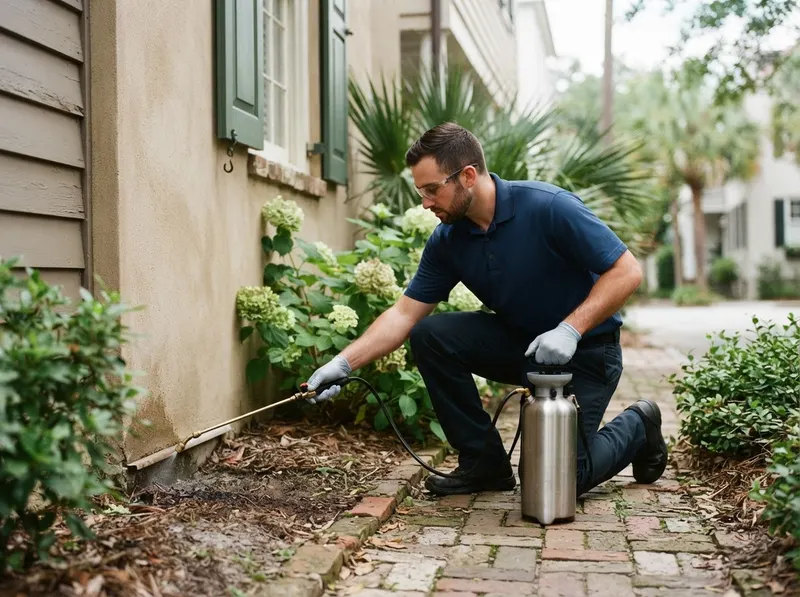
American cockroach infestations in Charleston County stem directly from high outdoor relative humidity and dense coastal groundcover rather than poor interior sanitation. In historic neighborhoods such as South of Broad, the French Quarter, and Harleston Village, brick masonry foundations and street-level access grates allow palmetto bugs to migrate up from municipal drainage lines into sub-floor framing. A standard interior aerosol spray provides temporary contact mortality but fails to disrupt the reproduction cycle occurring beneath the floorboards. Effective exclusion relies on creating a continuous exterior band along exterior siding, treating the ground out 5 to 10 feet into pine straw beds, and treating unconditioned crawlspaces beneath historic heart-pine subfloors.
In newer slab-on-grade developments across Daniel Island and West Ashley, American cockroaches exploit ground-level utility penetrations, garage threshold seals, and weep screeds along stucco or brick veneer. If an exterior perimeter barrier is applied without sealing ground-contact gaps, nymphs and flying adults navigate through wall voids to surface in upstairs bathrooms and kitchens. Applying synthetic pyrethroid microencapsulations ensures the active chemical barrier remains stable under intense maritime UV exposure and routine afternoon thunderstorm runoff, retaining insecticidal efficacy on brick, tabby concrete, and mortar for 60 to 90 days.
For short-term rental operators and property owners in Wagener Terrace, Hampton Park Terrace, and James Island, adult palmetto bugs crossing interior living spaces produce immediate tenant complaints and negative reviews. The decision between localized interior spot treatments and a full structural barrier treatment comes down to harborages versus transit routes. While gel baits target enclosed indoor utility chases, an exterior architectural barrier eliminates the source colonies harbored in damp live oak root systems, sub-grade water meter boxes, and crawlspace moisture pockets before entry occurs. The trade-off is mechanical: an exterior barrier requires clearing mulch away from foundation footings to maintain direct soil-to-masonry contact, ensuring liquid barriers adhere directly to the structural perimeter.
Every job gets a firm, written price after a free on-site visit.
Tell us about your american cockroach barrier treatment job in Charleston and we'll send a clear, written quote, usually the same day.
 PestDefender Pro